The walk across campus at night looks different from the way it did five years ago. Where glowing blue light poles once stood as the primary link to emergency safety services, that link is now as close as the phone in students’ pockets.
University Police Chief William Scheufens said Hurricanes Laura and Delta in 2020 destroyed approximately 80% of the university’s emergency blue light stations. Scheufens said the damage revealed that the analog systems were becoming “antiques,” with parts that were either unavailable or too expensive to replace.
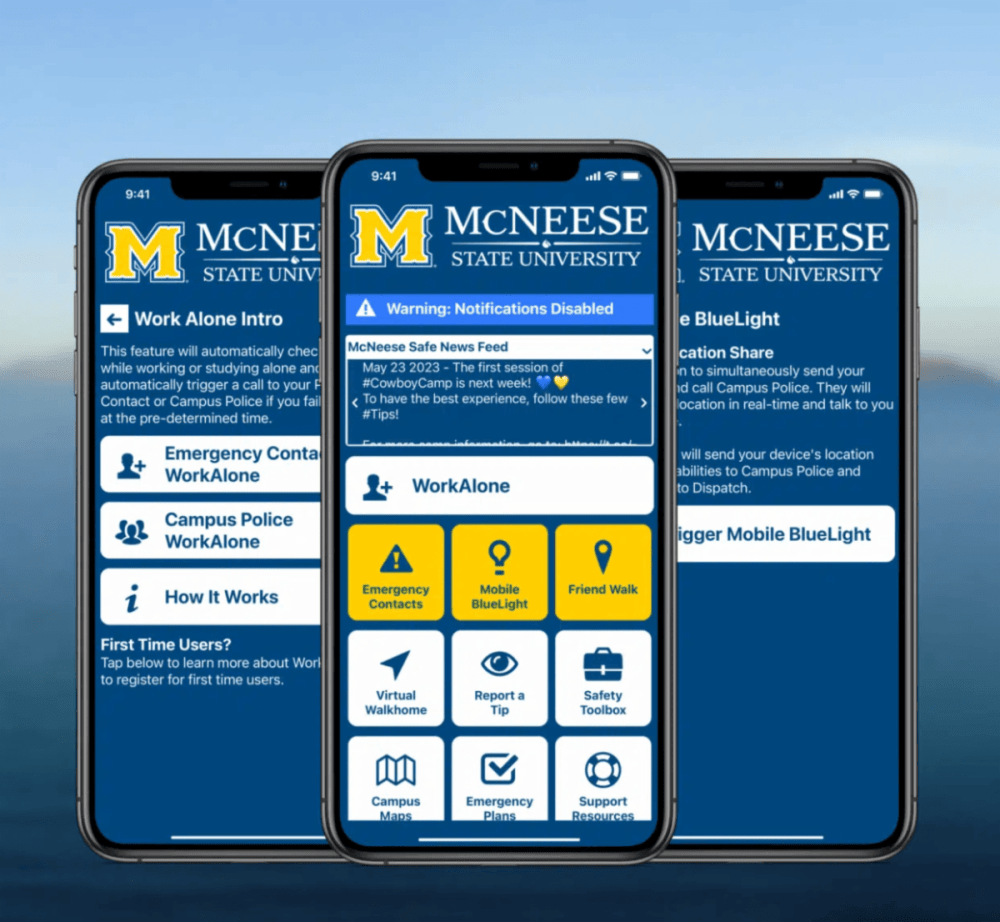
In response, the department transitioned to a mobile safety app. “McNeese Safe,” which was introduced to campus two and a half years ago, was the result of a rapid development cycle. Scheufens credited Lt. Erin Willis as the “mechanic” who worked through the night for several days to finalize the system.
The app includes a mobile panic button which alerts the police of a person’s location when it is triggered.
“You don’t have to try to stand there while somebody’s stalking you and tell the police what’s going on,” Scheufens said. “You can hit this and keep moving… It’s going to start dropping those electronic breadcrumbs for dispatch to be able to track you.”
These “breadcrumbs” also power the Virtual Walk Home feature. While university police still offer physical vehicle escorts for students who feel unsafe late at night, the app allows a dispatcher or a student’s trusted friend to monitor a user’s GPS path in real-time. If a student stops moving or fails to reach their destination, the system triggers an alert for dispatch to check their location.
Last semester, the department used the app as a tool to send out notifications during a lockdown drill. However, Scheufens noted that only students who opted in to push notifications were able to see it. Willis said the app currently has 5,084 users opted in to push notifications. McNeese’s currently has 6,556 students, not including faculty.
To bridge this gap, the department is exploring “geofencing” technology that would allow the university to broadcast emergency alerts to every smartphone within a specific campus boundary, regardless of whether they have the app installed.
Beyond emergency response, the app has a toolkit for daily campus life. The “Report a Tip” feature allows students to text dispatchers directly and attach photos of suspicious activity or crimes in progress.
The app also has direct links to student wellness services from offices such as the Counseling Center, Housing, and the Office of Inclusive Excellence. It also includes an “Emergency Plans” section, which provides digital handbooks on how to handle emergencies such as active shooter situations, bomb threats, and shelter-in-place orders.